
How Providers Choose Dermal Filler in Jacksonville | Ageless
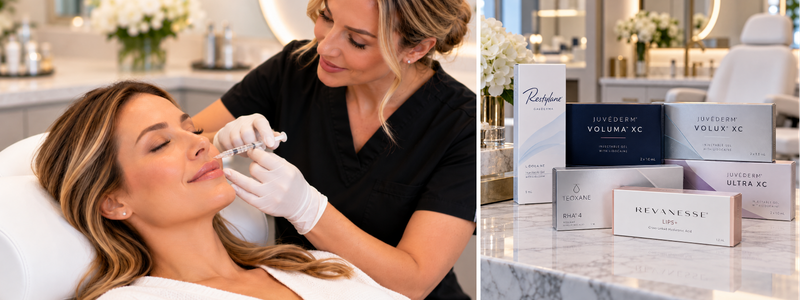
If you are researching dermal filler, it is easy to think the first decision is choosing a brand: Restylane or Juvéderm? For most patients, that is not actually where a thoughtful treatment plan begins. You may find it helpful to read a broader where to start with injectables overview before focusing on specific filler brands.
At Ageless Rejuvenation Center in Mandarin, Jacksonville, filler planning starts with the result you want, the area being treated, your facial anatomy, how that area moves, and your comfort with the amount of change. The brand and specific product come after those questions—not before them.
Both Restylane and Juvéderm are established families of hyaluronic acid dermal fillers. Each family includes multiple products designed for specific approved uses. That means “Which brand is better?” is usually less useful than “Which product makes sense for this area and this goal?”
Restylane and Juvéderm Are Filler Families, Not Single Products
One reason filler research gets confusing is that people often use Restylane and Juvéderm as if each name refers to one universal gel. In reality, each is a collection of hyaluronic acid fillers.
Different products within each collection are intended for different treatment areas and goals. Some are approved for lip augmentation, some for facial folds, some for cheek or chin augmentation, and some for other specific indications. This is why a recommendation should be based on the specific product—not just the logo on the box. If you are still deciding whether filler is the right category of treatment, a Botox vs. fillers comparison can also clarify how these options differ.
1. The Treatment Area Changes the Decision
Lips, cheeks, chin, jawline, folds around the mouth and other facial areas do not all behave the same way. They differ in tissue thickness, movement, structural support and the kind of correction a patient may want.
For example, a treatment plan focused on lip shape and softness is solving a different problem than a treatment plan focused on cheek support or chin projection. A provider should choose a product whose approved use and characteristics fit the area being treated. In some cases, your injector may also discuss collagen-stimulating options like Sculptra for collagen rebuilding as part of a long-term plan.
If you are specifically interested in a Restylane option, review Ageless’s Restylane filler treatments in Jacksonville. If your provider is considering the Juvéderm family, you can also review Juvéderm filler treatments in Jacksonville.
2. Your Anatomy and Starting Point Matter
Two patients can ask for the same general result and still need very different plans.
Your provider may evaluate facial proportions, existing volume, tissue support, asymmetry, prior filler, bone structure and how the surrounding areas relate to one another. A patient who wants subtle lip refinement may not need the same approach as someone restoring age-related volume or improving facial balance.
This is one reason copying a friend’s treatment plan—or asking for the exact same number of syringes—can be misleading. The number only makes sense in the context of the person and the goal.
3. Movement Can Influence Product Selection
Some areas of the face move constantly when you speak, smile or make expressions. Others need more structural support. Providers may consider how a product behaves in a dynamic area versus a more structural area when choosing among appropriate options.
This does not mean one family is always “softer” and the other is always “firmer.” Both collections include multiple formulations. Broad brand-level labels oversimplify what is actually a product-by-product decision.
4. Your Goal Should Drive the Plan
Before discussing brands, describe the change you actually want.
Do you want subtle refinement or a more noticeable change?
Are you trying to restore volume, add definition, smooth a fold or balance a feature?
Are you worried about looking overfilled or losing your natural features?
Is this your first filler treatment, or are you building on a previous plan?
Those answers are more useful to your injector than arriving with a product name you saw on social media.
5. Treatment History Can Change the Conversation
If you have had filler before, tell your provider what was treated, what product was used if you know it, when it was injected, and what you liked or disliked about the result.
Prior treatment can affect the current assessment. A provider may need to evaluate existing filler, changes in facial volume over time, or whether the next step should be more filler at all.
Is Restylane Better Than Juvéderm?
There is no universal winner.
The more accurate answer is that both product families contain FDA-approved hyaluronic acid fillers, and different products may be appropriate for different treatment areas and goals. The quality of the treatment plan depends on matching the product to the patient rather than treating brand preference as the entire decision.
A good question to ask your injector is: “Why are you recommending this specific product for me?” You should understand what the provider is trying to accomplish and how the recommendation fits your goal.
How Much Filler Do I Need?
Syringe count is another number that gets too much attention online.
The amount used depends on the treatment area, your anatomy, your starting point, the degree of change you want and whether the provider recommends a staged approach. One person’s syringe count is not a useful benchmark for another person’s face.
If natural-looking filler is your priority, say that clearly. It may be appropriate to make a smaller change first and reassess rather than trying to accomplish every goal in one visit.
What Does “Natural-Looking” Filler Actually Mean?
Natural-looking filler is not one product. It is a treatment philosophy.
It usually involves realistic goals, respect for facial proportions, appropriate product selection, conservative decision-making when indicated and a willingness to stop when the balance looks right.
The goal at Ageless is not to convince every patient to do more. It is to help you understand your options and build a plan that still looks and feels like you.
Questions to Ask at Your Filler Consultation
What are you recommending for my goal, and why?
Which specific filler product are you considering?
Is that product approved for the area we are discussing?
What kind of change should I realistically expect?
What temporary swelling, bruising or recovery should I plan around?
Would you recommend treating everything at once or taking a staged approach?
How should I plan treatment if I have an important event coming up?
Dermal Filler in Mandarin and Jacksonville: Start With the Goal
If you are choosing between Restylane and Juvéderm, you do not need to make the final product decision before your appointment. Start with the result you want and the questions you have.
You can explore Ageless treatments before your visit, then schedule a personalized consultation to talk through anatomy, product options, expectations and timing.
The best filler choice is not the brand with the strongest marketing. It is the product that appropriately fits your treatment plan.
Frequently Asked Questions
Are Restylane and Juvéderm both hyaluronic acid fillers?
Yes. Both are families of hyaluronic acid dermal fillers, with multiple products intended for specific approved uses.
Should I choose my filler brand before my consultation?
No. It is usually more useful to arrive with your goals and concerns. Your provider can explain which specific product options are appropriate for the area being treated.
Can I use the same filler in every area of the face?
Not necessarily. Filler products have different approved uses and characteristics. Product selection should match the treatment area and plan.
How can I avoid looking overfilled?
Tell your provider that natural-looking results and preservation of your features are priorities. A personalized and sometimes staged plan may be appropriate.
Provider Filler Selection: Additional FAQs
How do providers select filler type for different areas of the face?
Providers match the filler to the job it needs to do. For example, lips and under-eyes often require softer, more flexible gels that move naturally with expression, while cheeks, chin, and jawline usually need more structurally supportive products that can lift or contour. Your injector also considers skin thickness, how much volume is needed, and whether the area is primarily dynamic (moving a lot) or structural (providing support). Within the Restylane and Juvéderm families, there are multiple options designed with these different needs in mind.
What makes Restylane and Juvéderm different from each other?
Both families are made of hyaluronic acid, but they use different proprietary technologies to create their gels. These differences affect how the products feel, how they integrate with tissue, and how they behave in motion or when providing lift. Some Restylane products may be favored for definition or structure, while certain Juvéderm options may be preferred for smoothness or plumping in mobile areas. In practice, the injector is less focused on the brand name and more on which specific product within each line best fits your anatomy, treatment area, and goals.
How does my anatomy affect which filler my provider recommends?
Your unique anatomy is one of the most important factors in filler selection. Providers look at facial proportions, bone structure, skin quality, existing volume, asymmetry, and how nearby areas interact when you smile or speak. Someone with naturally full cheeks but a recessed chin will need a very different plan than someone with midface volume loss and thinner lips. The same is true if you have previous filler in place. All of these details guide the choice of product, placement, and amount so the result looks balanced on your face—not like a template copied from someone else.
What does a dermal filler consultation in Jacksonville usually involve?
A typical consultation includes a conversation about your goals, medical history, and any previous injectable treatments, followed by a detailed facial assessment. Your provider will examine your features at rest and with expression, discuss which areas can safely and realistically be treated, and outline product options from families like Restylane and Juvéderm. You’ll review expected results, possible side effects, downtime, and whether a staged approach makes sense. The goal is to leave with a clear, individualized plan rather than a one-size-fits-all recommendation.
How long do dermal filler results usually last by filler type?
Longevity depends on the specific product, treatment area, and your metabolism. Many hyaluronic acid fillers in the Restylane and Juvéderm families last around 6–12 months in high-movement areas like the lips, and 12–18 months or longer in more structural areas such as the cheeks or jawline. Thicker, more lifting gels often last on the longer end of that range, while softer gels in dynamic areas may fade sooner. Your provider can give a more precise estimate based on the exact filler being used and where it is placed.