Menopause & Midlife Wellness in Jacksonville | Ageless
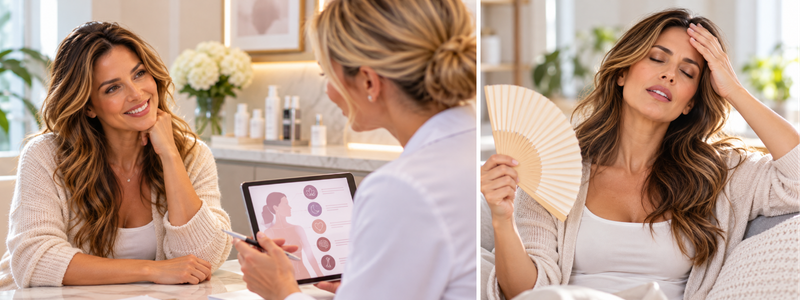
Midlife can bring changes that are easy to separate into different boxes: sleep in one box, skin in another, mood somewhere else, and hot flashes or menstrual changes in another.
In real life, those changes can overlap. A person may be thinking about how they look at the same time they are wondering why they are sleeping differently, why periods are changing or why vaginal dryness suddenly became part of the conversation.
That is why whole-person wellness at midlife should not start with a product. It should start with understanding what you are experiencing and deciding what deserves a closer look.
What Are Perimenopause and Menopause?
Perimenopause is the transition leading up to menopause. During this time, hormone levels can fluctuate and menstrual patterns may change. Menopause is confirmed after a person has gone 12 months without a menstrual period.
The transition is different for everyone. Some people have mild changes. Others experience symptoms that meaningfully affect sleep, work, relationships, sexual health or quality of life.
ACOG lists common symptoms that can include hot flashes, night sweats, sleep problems, vaginal dryness, pain during sex and menstrual changes.
When Is It Worth Talking to a Provider?
You do not need to wait until symptoms feel unbearable before asking questions.
If a new or persistent change is affecting daily life, or you simply are not sure whether it fits the menopause transition, a provider conversation can help you sort through the possibilities.
The goal is not to assume every midlife symptom is caused by hormones. Sleep, stress, medications, nutrition, mental health, chronic conditions and other factors can overlap with symptoms people often attribute to menopause.
What Can a Midlife Wellness Evaluation Include?
A thoughtful evaluation starts with history and symptoms rather than a preset protocol.
What symptoms you have noticed and when they started.
Changes in your menstrual cycle, if applicable.
How symptoms affect sleep, work, exercise, intimacy or daily life.
Current medications and supplements.
Personal and family medical history.
Prior hormone treatment or related procedures.
Your goals and what you most want help understanding.
Depending on the situation, your provider may recommend additional evaluation, testing, treatment, lifestyle support or referral to another clinician.
Where Does Menopausal Hormone Therapy Fit?
Menopausal hormone therapy is one option for some patients—not the automatic answer for everyone.
ACOG notes that systemic estrogen therapy, with or without progestin when appropriate, is an effective treatment for hot flashes and night sweats. Hormone therapy can also help vaginal dryness, and systemic estrogen can help protect against bone loss early in menopause.
At the same time, benefits and risks depend on the person. Medical history, age, symptoms, family history and other risk factors matter. Systemic hormone therapy is generally not recommended in some situations, including certain histories of breast or endometrial cancer, stroke, heart attack, blood clots or liver disease.
The FDA similarly advises that menopause hormone therapy is not for everyone and that treatment decisions should be made with a health care provider.
What About “Bioidentical” or Compounded Hormones?
This is an area where marketing language can be confusing.
The FDA notes that many products marketed as “bioidentical hormones” are compounded drugs and are not FDA-approved. The FDA does not have evidence that compounded bioidentical hormones are safer or more effective than FDA-approved hormone therapy.
ACOG also recommends FDA-approved hormone therapy over compounded hormone therapy when an FDA-approved formulation is available.
That does not mean every patient receives the same medication or route. It means the conversation should be grounded in evidence, symptoms and individual risk—not in the assumption that “natural” or “custom” automatically means safer.
What If Hormone Therapy Is Not Right for Me?
There are nonhormonal options for some menopause symptoms.
ACOG lists options that can include vaginal moisturizers and lubricants, certain nonhormonal prescription medications and other approaches depending on the symptom. The right choice depends on what you are trying to treat and your medical history.
Whole-Person Wellness Is Bigger Than Hormones
Even when hormones are part of the conversation, midlife wellness can include much more.
Sleep, nutrition, physical activity, sexual health, preventive care, stress, weight changes, skin concerns and mental wellbeing may all affect how you feel. Some of those concerns may connect; others may need their own evaluation.
The goal is not to put every person into a single “optimization” program. It is to understand the whole picture and prioritize what matters most to you.
Aesthetics and Wellness Can Coexist
There is nothing contradictory about caring about how you look and how you feel.
A patient may be discussing skin texture, injectables or hair changes while also asking about sleep, sexual wellness, weight management or menopause symptoms. Those conversations can sit side by side without assuming every service belongs in the same plan.
You can explore Ageless health and wellness treatments to understand the range of services available, then use your consultation to decide what is actually relevant to you. Many patients also want to know where to start with aesthetic treatments or how to combine wellness treatments that work together for their goals.
Questions to Bring to a Midlife Wellness Appointment
Could these symptoms fit perimenopause or menopause?
Are there other causes we should consider?
What treatment options are evidence-based for my main symptom?
Would hormone therapy be appropriate for me? Why or why not?
If hormones are discussed, are the products FDA-approved or compounded?
What benefits, risks and side effects should I understand?
What should we monitor over time?
Midlife Wellness in Mandarin and Jacksonville: Start With the Conversation
If something feels different and you are not sure why, you do not need to diagnose yourself before you book.
Write down what you have noticed, bring your medication and treatment history, and be clear about what is affecting your life most. A thoughtful provider conversation should help you understand what deserves attention and which options are worth considering.
When you are ready, schedule a personalized consultation with Ageless Rejuvenation Center in Mandarin, Jacksonville.
Frequently Asked Questions
What is perimenopause?
Perimenopause is the transition leading up to menopause, when hormone levels may fluctuate and periods and other symptoms can change.
What symptoms can happen during menopause?
Common symptoms can include hot flashes, night sweats, sleep changes, vaginal dryness, pain during sex and menstrual changes during the transition.
Is hormone therapy right for everyone?
No. Hormone therapy can help certain symptoms for appropriate patients, but benefits and risks vary based on medical history and individual factors.
Are compounded bioidentical hormones safer than FDA-approved hormone therapy?
The FDA says it does not have evidence that compounded bioidentical hormones are safer or more effective than FDA-approved hormone therapy.
When should I seek medical guidance for menopause symptoms?
You may want to schedule an appointment if symptoms are disrupting sleep, work, relationships, sexual health or daily life, if bleeding patterns change in a way that feels concerning, or if you are unsure whether what you are noticing is related to menopause or another health issue. A provider can help rule out other causes, explain options and tailor a plan to your history and goals.
What wellness options are available at a med spa in Jacksonville for midlife women?
A med spa in Jacksonville may offer services that address skin, body and overall wellbeing together. Depending on your needs, this can include injectables, skin rejuvenation, PRP hair restoration for thinning hair, IV therapies, and medical weight loss in Jacksonville. Your consultation is the place to connect these options to your specific symptoms and goals.
How do hormonal changes during menopause affect skin and hair?
Shifts in estrogen and other hormones can contribute to dryness, changes in skin texture, fine lines, and hair thinning or shedding. A midlife wellness plan may include medical-grade skincare, in-office aesthetic treatments, or targeted options such as PRP hair restoration for thinning hair to support healthy hair growth.
What can I expect from aesthetic and wellness treatments during midlife?
Most midlife treatment plans are personalized rather than one-size-fits-all. You might combine skin treatments, injectables, Tirzepatide and Semaglutide weight loss support, or other services based on your goals. The focus is usually on natural-looking results, symptom relief and sustainable wellness rather than an extreme makeover.
Can weight management be part of a menopause wellness plan?
Yes. Many people notice weight shifts around midlife, and a comprehensive plan may include nutrition, activity, sleep support and medical options when appropriate. At a med spa, this can include programs such as Tirzepatide and Semaglutide weight loss alongside lifestyle coaching to help you feel more like yourself again.