
Hair Thinning or Shedding? Understanding Hair Loss & PRP Hair Restoration
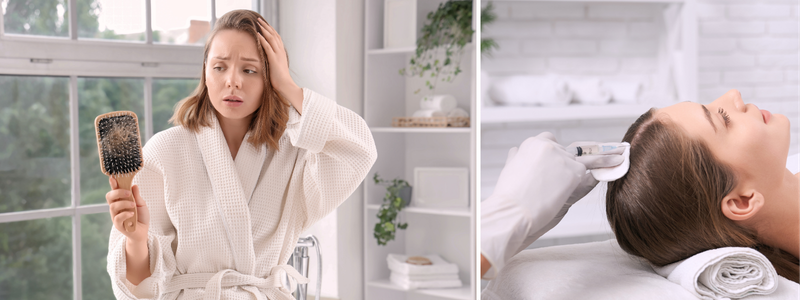
Noticing more hair in your brush? Seeing extra strands in the shower? Maybe your ponytail feels thinner, your part looks wider, or you're simply seeing more scalp than you remember.
Hair changes can happen gradually, which can make it difficult to know whether you're experiencing temporary hair shedding or actual hair loss.
Genetics, hormones, stress, aging, nutrition, illness, medications, and other factors may all play a role. And because different types of hair loss can require different approaches, understanding what may be causing the change is an important first step.
For men and women experiencing hair thinning in Jacksonville, recognizing changes early can also help you have a more informed conversation about whether treatment options such as PRP/PRF hair restoration may be appropriate.
In recognition of Hair Loss Awareness Month, we're breaking down some of the most common questions about thinning hair, shedding, hair loss, and PRP hair restoration.
Hair Shedding vs. Hair Loss: What's the Difference?
Everyone sheds hair.
It is normal to lose approximately 50 to 100 hairs per day as part of the natural hair-growth cycle.
Sometimes, however, significantly more hairs than usual enter the shedding phase. This excessive shedding is often referred to as telogen effluvium.
You may notice:
More hair collecting in the shower
Extra strands on your pillow
More hair coming out while brushing or styling
Increased hair collecting around the house
A sudden overall increase in shedding
Excessive shedding can sometimes occur a few months after a significant physical or emotional stressor, including illness, high fever, surgery, childbirth, rapid weight loss, or significant stress.
That delay can make the connection difficult to recognize.
Hair loss may look different.
Instead of simply noticing additional loose hairs, you may begin to see a change in your hair's density, coverage, or growth pattern.
Possible signs include:
A widening part
A thinner ponytail
Increased scalp visibility
Gradual thinning across the top of the head
A receding hairline
Thinning around the temples or crown
Bald or noticeably sparse areas
For many women, the first sign may be a wider part or an overall decrease in hair volume. Men may be more likely to notice changes around the hairline, temples, or crown.
Why Is My Hair Thinning?
There isn't one single cause of thinning hair.
That's why choosing a treatment before understanding the potential cause isn't always the best place to start.
Several factors may contribute to hair thinning or hair loss.
Genetics
Hereditary or pattern hair loss is one of the most common causes of progressive hair thinning.
It can affect both men and women and usually develops gradually rather than appearing overnight.
Men may notice a receding hairline or thinning at the crown, while women may experience more diffuse thinning or a widening part.
Hormonal Changes
Hormones can influence the hair-growth cycle.
Some women notice significant changes following pregnancy or during perimenopause or menopause. Other hormonal changes may also contribute to increased shedding or changes in hair density.
Stress, Illness or Physical Changes
Major physical or emotional stress can temporarily affect the normal hair-growth cycle.
Illness, fever, surgery, significant emotional stress, or rapid weight loss may cause more hairs to move into the resting and shedding phases.
Because shedding may not become noticeable until months after the event, people sometimes have difficulty identifying the trigger.
Aging
Hair naturally changes as we get older.
Individual strands may become finer, growth may slow, and overall density may decrease. These changes can make the scalp more visible even without sudden hair loss.
Nutrition and Medical Conditions
Nutrition plays an important role in healthy hair growth.
Certain nutritional deficiencies, thyroid conditions, medications, and other health concerns can sometimes contribute to increased shedding or hair loss.
This is one reason sudden or unexplained hair loss deserves appropriate medical evaluation rather than automatically assuming the cause is cosmetic.
Hair Care and Styling
Repeated tension from tight ponytails, braids, extensions, or other hairstyles can contribute to hair loss over time.
Frequent heat styling, chemical processing, and breakage may also make already-thinning hair appear less dense.
Hair Loss Isn't Just a Men's Concern
Hair loss is often associated with male pattern baldness, but hair thinning affects women, too.
It simply may not look the same.
Women may notice:
A widening center part
Less volume
Increased scalp visibility
A smaller-feeling ponytail
More diffuse thinning across the top of the scalp
Men may be more likely to notice:
A receding hairline
Thinning temples
Loss around the crown
Progressive pattern thinning
Because these changes often develop slowly, they can be difficult to recognize from one day to the next.
One simple way to track changes is to compare photographs taken several months apart. Looking at your part, hairline, temples, and crown under similar lighting may make gradual changes easier to recognize.
Why Paying Attention Early Matters
Finding more hair in the shower one morning doesn't necessarily mean you're experiencing progressive hair loss.
But persistent changes are worth paying attention to.
Hair loss treatment isn't one-size-fits-all because the reason your hair is changing matters.
Temporary shedding following an illness is different from hereditary pattern hair loss. Hair breakage is different from hair loss at the follicle. Sudden patchy hair loss may require a very different evaluation than gradual thinning.
Understanding the pattern and possible cause can help determine what next steps make sense—and whether a hair restoration treatment should even be part of the conversation.
What Is PRP Hair Restoration?
Platelet-rich plasma, or PRP, hair restoration is a minimally invasive treatment that uses a concentrated portion of your own blood.
A small sample of blood is collected and processed to separate and concentrate platelet-rich components. Platelets contain growth factors involved in the body's natural healing and regenerative processes.
The prepared PRP is then strategically introduced into areas of the scalp experiencing thinning.
PRP has been used as a treatment option for certain types of hair thinning and pattern hair loss in both men and women. Results vary, however, and PRP is not appropriate for every type or cause of hair loss.
At Ageless Rejuvenation Center in Jacksonville, Florida, we offer personalized PRP/PRF hair restoration for appropriate candidates experiencing concerns such as thinning, shedding, or pattern hair loss.
PRP vs. PRF Hair Restoration
You may see both PRP and PRF mentioned when researching hair restoration.
PRP stands for platelet-rich plasma, while PRF stands for platelet-rich fibrin.
Both are prepared from a patient's own blood and concentrate platelet-rich components that can be used during regenerative treatments. The preparation process and resulting concentration differ, and your provider can explain which approach may be appropriate based on your treatment plan.
Rather than focusing on choosing PRP or PRF yourself, the more important first step is determining whether you are a good candidate for regenerative hair restoration at all.
What Happens During PRP/PRF Hair Restoration?
Treatment is performed in-office and generally follows several steps.
1. Consultation
Your provider begins by discussing your concerns, health history, pattern of thinning, current medications, and treatment goals.
This step matters because PRP/PRF isn't necessarily the right approach for every person experiencing hair loss.
2. Blood Draw
YA small amount of blood is collected, similar to a routine blood draw.
3. PRP or PRF Preparation
Your blood is processed to separate and concentrate the platelet-rich components that will be used during treatment.
4. Targeted Scalp Treatment
The prepared PRP or PRF is strategically introduced into areas of the scalp where treatment is recommended.
The exact number and timing of sessions varies from person to person. Your provider will recommend a treatment plan based on your hair concerns, pattern of loss, goals, and response to treatment.
What Are the Potential Benefits of PRP/PRF Hair Restoration?
For appropriate candidates, PRP/PRF hair restoration offers several characteristics that make it appealing.
Uses Your Own Blood-Derived Components
PRP and PRF are prepared from a patient's own blood rather than using a synthetic filler or implant.
Minimally Invasive
Treatment is performed through targeted scalp injections without hair-transplant surgery.
Personalized Treatment
Areas of treatment and the overall plan can be tailored to the individual's pattern of thinning and goals.
Gradual Approach
Hair restoration is not an instant transformation.
Changes occur over time as the hair naturally moves through its growth cycle, and individual responses can vary.
Is PRP Hair Restoration Right for Everyone?
No—and that's important.
PRP/PRF may be an option for some men and women experiencing thinning or certain forms of pattern hair loss, but it isn't a universal hair-loss solution.
Some causes of hair loss may require evaluation or treatment outside of cosmetic hair restoration. In addition, not every patient responds to PRP in the same way.
That's why the goal shouldn't simply be:
“I want PRP.”
A better question is:
“Why is my hair changing, and what options may be appropriate for me?”
A personalized consultation can help determine whether PRP/PRF hair restoration belongs in
When Should Hair Loss Be Evaluated Medically?
Some changes warrant evaluation by an appropriate healthcare professional or dermatologist.
Consider seeking medical guidance if you experience:
Sudden or dramatic hair loss
Bald patches that develop quickly
Persistent or severe excessive shedding
Scalp pain
Redness or inflammation
Significant itching or scaling
Sores or other scalp changes
Unexplained hair loss
Hair loss accompanied by other new symptoms
Hair loss can sometimes be associated with an underlying medical condition, nutritional issue, medication, or other health concern.
Sudden or unexplained changes shouldn't automatically be assumed to be cosmetic.
Frequently Asked Questions About Hair Thinning and PRP
How do I know if I'm shedding too much hair?
Some daily shedding is normal. What matters is whether you notice a significant change from your normal pattern.
If you're consistently seeing much more hair in the shower, brush, bedding, or clothing—or you begin noticing visible changes in your hair density—it may be worth discussing with a healthcare professional.
What's the difference between hair thinning and hair loss?
Hair thinning typically describes a gradual reduction in density or fullness. Hair loss is a broader term that can include increased shedding, pattern loss, bald patches, or other changes in hair growth.
Determining the pattern can help identify possible causes and appropriate next steps.
Can PRP help thinning hair?
PRP may be beneficial for some people with certain types of hair thinning or pattern hair loss.
However, response varies, and PRP isn't appropriate for every cause of hair loss. An evaluation is important before beginning treatment.
Does PRP hair restoration work for women?
PRP hair restoration is used for both men and women.
Women experiencing gradual thinning or certain patterns of hair loss may be candidates, but treatment recommendations depend on the cause and pattern of hair loss.
How many PRP hair restoration treatments will I need?
There is no single treatment schedule that applies to everyone.
PRP/PRF hair restoration is typically performed as a series rather than a one-time treatment, with maintenance sometimes recommended afterward. Your provider will determine the appropriate schedule based on your individual needs and response.
How quickly will I see results from PRP hair restoration?
Hair growth takes time.
PRP/PRF hair restoration should be viewed as a gradual treatment rather than an immediate cosmetic change. Timing varies depending on the individual, treatment plan, type of hair loss, and natural hair-growth cycle.
Is there downtime after PRP/PRF hair restoration?
PRP/PRF hair restoration is minimally invasive and generally does not require the type of recovery associated with surgical hair restoration.
Temporary scalp tenderness, redness, or sensitivity may occur following treatment. Your provider will review specific aftercare instructions with you.
Healthy Hair Starts With Understanding What's Changing
Hair thinning can be frustrating—especially when you don't know why it's happening.
Maybe your ponytail feels smaller.
Maybe your part looks wider.
Maybe you're seeing more of your scalp than you remember.
Maybe your hairline has slowly changed.
Or maybe you're simply finding far more hair in the shower than usual.
Whatever brought you here, the first step isn't necessarily choosing a treatment.
It's understanding the change.
Once you have a clearer picture of what may be happening, you can have a more informed conversation about your options—including whether PRP/PRF hair restoration may be appropriate.
Explore PRP/PRF Hair Restoration in Jacksonville, FL
If you're concerned about thinning hair, increased shedding, or changes in your hair density, you don't have to start by deciding which treatment you need.
Start with a conversation.
At Ageless Rejuvenation Center in Jacksonville's Mandarin area, our team offers personalized consultations and PRP/PRF hair restoration treatments designed around each patient's concerns, goals, and candidacy.
Learn more about our PRP/PRF Hair Restoration in Jacksonville and whether it may be an appropriate option for you.
Schedule a complimentary consultation.
Call 904.990.8484 or book online to schedule.
Individual results vary. Hair loss may have multiple causes, and PRP/PRF hair restoration may not be appropriate for every patient. A consultation is necessary to determine candidacy. Sudden, unexplained, or medically concerning hair loss should be evaluated by an appropriate healthcare professional.